Guides
Restic Backups for a Homelab: Encrypted
Set up restic for homelab file-level backups to Backblaze B2 or a local NAS: snapshots, retention, systemd timers, and the restore test that proves it works.
Jellyfin Hardware Transcoding With QuickSync
Turn on QuickSync hardware transcoding in Jellyfin on Docker: device passthrough, permissions, the settings that matter, and how to prove it works.
Plex Media Server on a Mini PC: Setup Guide
Run Plex on a low-power mini PC with Docker: full Compose config, hardware transcoding setup, remote access, and an honest look at what Plex Pass costs.
Homelab Disaster Recovery Runbook
Backups are the easy half. This is the restore half: a recovery runbook, tiered priorities, bare-metal Proxmox rebuild, and the drill that proves it works.
Vaultwarden Organizations for Families
Stop sharing a login over text. Set up Vaultwarden organizations and collections so your household shares the passwords it should, and nothing it shouldn't.
ntfy Setup: Self-Hosted Push Notifications
Run your own push notification server with ntfy. Send alerts from any script or service straight to your phone, with authentication on from the first boot.
Self-Hosted Internet Speed Monitor
Run Speedtest Tracker in Docker to log download, upload, and latency every hour, then pair it with Uptime Kuma for proof when your ISP says the line is fine.
Homelab Email Notifications Setup
Get one inbox that tells you when a service goes down, a backup fails, or a container updates. Email alerts from Uptime Kuma, Proxmox, and Docker via Gmail.
Syncthing for Homelab: Sync All Your Devices
Scale Syncthing past one laptop. Real folder-sharing strategy, versioning, and per-device ignore patterns for a mesh of laptops, phones, and a homelab server.
Homelab Automation: Backups and Updates
Set your homelab to back itself up, update its containers, and alert you when something breaks, using cron, Watchtower, Proxmox vzdump, and Uptime Kuma.
Immich + Syncthing Phone Photo Backup
Combine Immich and Syncthing for phone photo backup: a plain-file copy of your camera roll on your server plus a searchable Immich timeline. No cloud needed.
Create a Proxmox LXC Template for Docker
Build a reusable Proxmox LXC template preconfigured for Docker. Cuts new Docker-host setup from 30 minutes to 30 seconds, with the kernel and AppArmor settings.
Run a Local AI With Ollama on Your Homelab
Set up Ollama on Docker to run large language models locally (Llama 3, Mistral, Gemma, and more), with a web UI for chatting and an API for integrations.
Self-Host an LLM at Home With Ollama
Run a private, offline ChatGPT alternative on your own hardware with no ongoing subscription cost. No GPU required. Setup from hardware to first conversation.
Proxmox Beginner's Guide: VMs and LXC
A plain-English walkthrough of how Proxmox works: VMs vs containers, the web UI, storage, networking, and running your first self-hosted service safely.
Nextcloud AIO: Self-Hosted Google Drive
Set up Nextcloud All-in-One on Docker for file sync, photo backup, calendar, contacts, and office document editing, all on your own server.
Set Up Pi-hole or AdGuard Home
Compare Pi-hole and AdGuard Home, then set up whichever fits your homelab. Full Docker Compose configs, DNS integration, and blocklist recommendations.
Self-Hosted WireGuard VPN Server Setup
Set up a WireGuard VPN server on Docker using wg-easy for a clean web UI, then connect your devices for secure remote access to your homelab.
Grafana + Prometheus Homelab Monitoring
Set up Prometheus to collect metrics and Grafana to visualize them: CPU, memory, disk, and container stats across your entire homelab.
Jellyfin Media Server Setup Guide
Set up Jellyfin on Docker with hardware transcoding, organize your library, and access it from any device. Full walkthrough with working Docker Compose config.
Portainer Setup Guide for Docker
Install Portainer to manage your Docker containers, stacks, volumes, and images through a web interface instead of the command line.
Watchtower: Auto-Update Docker Containers
Use Watchtower to automatically keep your Docker containers updated to the latest image versions, with notifications and scheduling options.
Immich vs Google Photos: Self-Hosted Setup
Set up Immich on Docker to replace Google Photos. Face recognition, mobile backup, timeline view, all on your own hardware. Full Docker Compose walkthrough.
Pi-hole DNS Ad Blocking Setup Guide
Set up Pi-hole on Docker to block ads and tracking at the DNS level across your entire network. No browser extensions, no per-device setup.
Uptime Kuma Setup for Homelab Monitoring
Set up Uptime Kuma on Docker to monitor every service in your homelab, get instant alerts when something goes down, and publish a status page.
Netdata Setup: Real-Time Homelab Monitoring
Netdata gives you per-second system metrics, automatic anomaly detection, and 2,000+ pre-built charts, all without writing a single config file.
Paperless-ngx Docker Setup Guide
Install Paperless-ngx with Docker Compose, configure OCR and automatic tagging, and set up an inbox folder that processes documents automatically.
Duplicati Backup Setup for a Homelab
Duplicati backs up homelab data to local storage, a NAS, or the cloud, encrypted and deduplicated. How to set it up and what to actually back up.
Mealie Docker Setup: Self-Host Your Recipes
Install Mealie with Docker Compose, import recipes from any URL, and set up meal planning with a self-hosted recipe manager that actually works.
Syncthing Docker Setup: Free File Sync
Set up Syncthing in Docker in under 10 minutes and sync files between your laptop, phone, and homelab server. No Dropbox, no subscription, no third-party cloud.
Set Up a Local DNS Server With Technitium
Run Technitium DNS in Docker to get internal hostnames, ad blocking, and split DNS for your homelab. No more IP addresses in your browser.
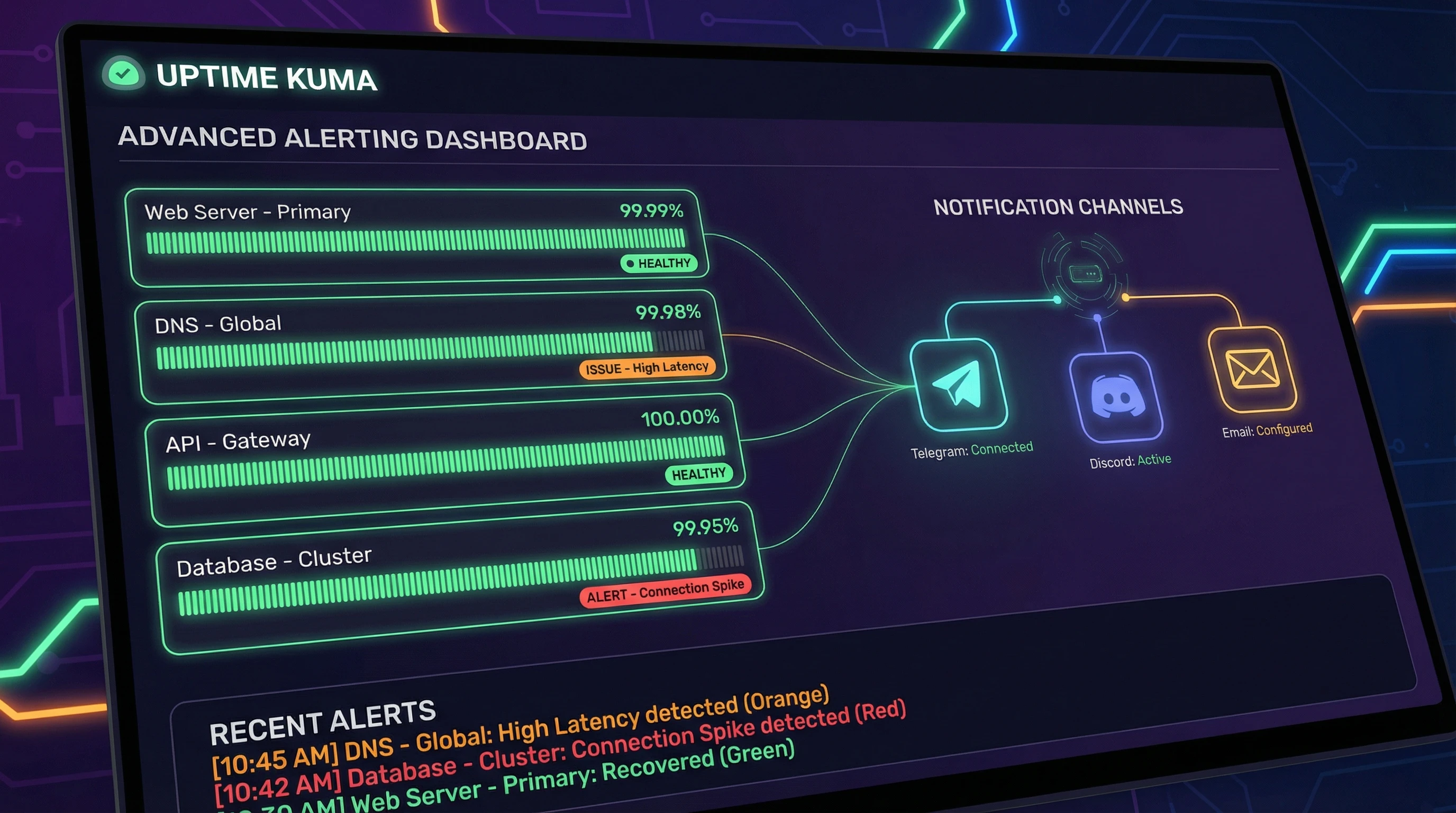
Uptime Kuma Advanced Alerting Guide
Go beyond basic HTTP checks: configure Uptime Kuma to alert on response time, SSL expiry, and keywords, and notify via Discord, Telegram, or email.
Nginx Proxy Manager Docker Setup Guide
Install Nginx Proxy Manager with Docker Compose, add your first proxy host, and get HTTPS working for every service on your homelab.
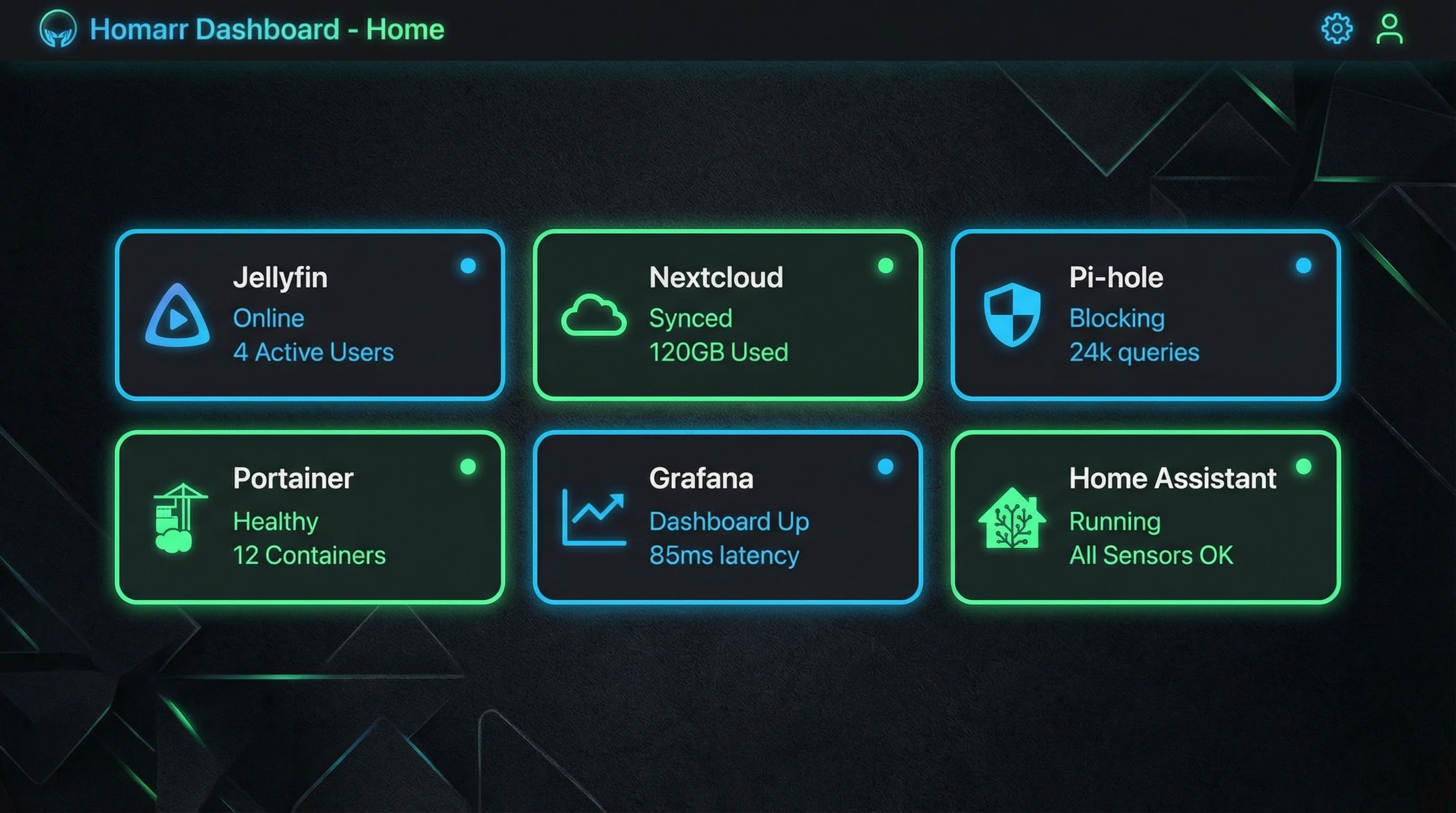
Homarr Dashboard Setup for Your Homelab
Homarr is a clean, modern homelab dashboard that integrates with your services, shows real-time stats, and gives you a single page to launch everything from.
Docker Compose for Beginners
How to write Docker Compose files, organize your homelab services, manage environment variables, and keep everything maintainable long-term.
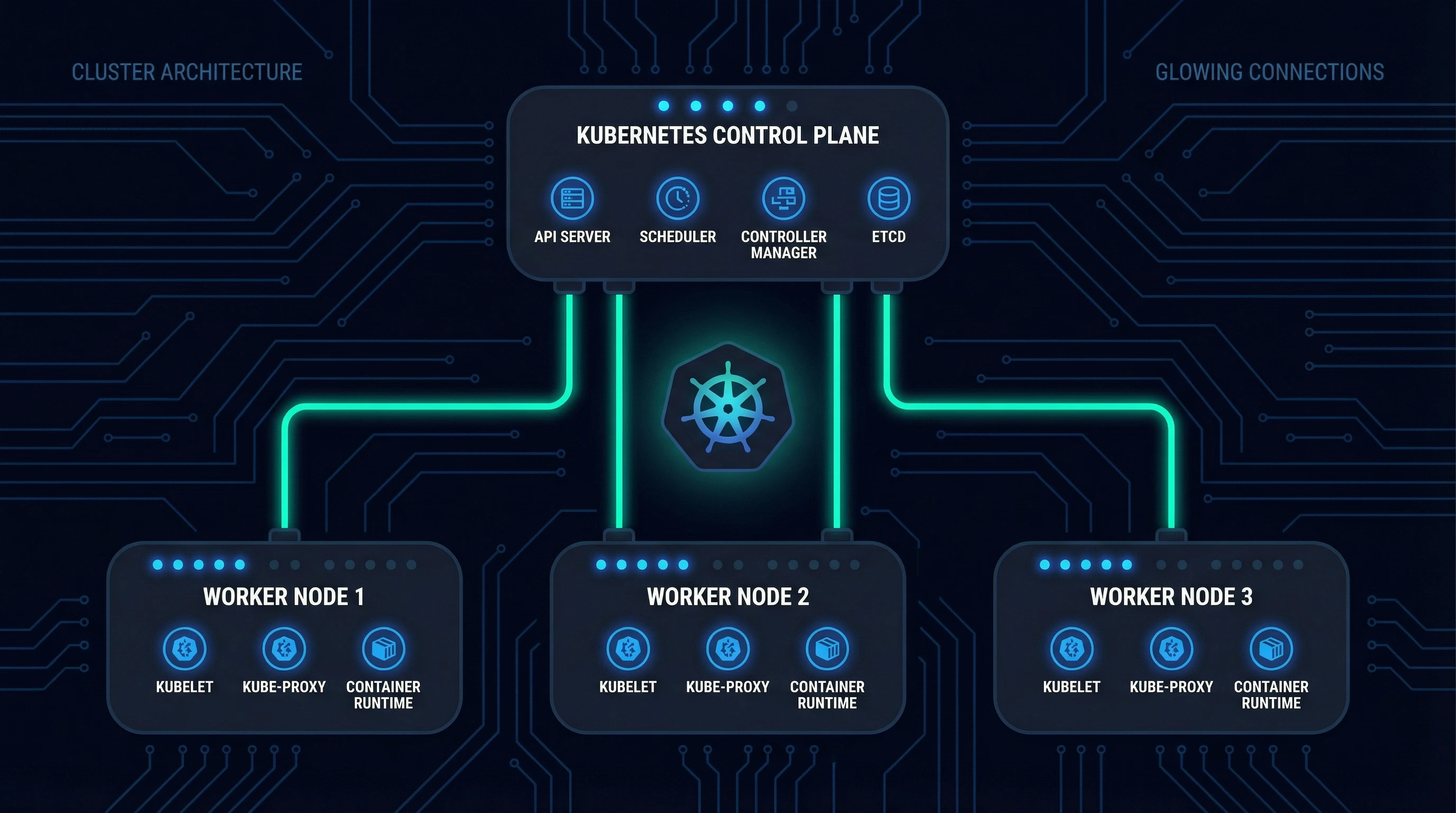
K3s on Proxmox: Kubernetes Cluster Setup
Run a lightweight Kubernetes cluster on Proxmox VMs. This guide walks through VM prep, K3s installation, kubectl access, and your first deployment.
Ghost: Self-Hosted Blogging Platform Setup
Deploy Ghost on Docker for a clean, fast self-hosted blog or newsletter platform with membership support, built-in SEO, and a polished editor.
Paperless-ngx Scanner Workflow
The next step after installing Paperless-ngx: pick a scanner that works with it, set up your consume folder, and build a workflow that takes seconds per page.
Gitea: Self-Hosted Git Server on Docker
Set up Gitea on Docker for a self-hosted GitHub alternative: code hosting, issue tracking, pull requests, and CI/CD pipelines on your own server.
FreshRSS: Self-Hosted RSS Reader Setup
Deploy FreshRSS on Docker to follow blogs, news, and podcasts through a single self-hosted feed reader, with multi-device sync and app support.
Linkwarden: Self-Hosted Bookmark Manager
Deploy Linkwarden on Docker to save, organize, and archive web pages, with full-page screenshots, PDF snapshots, and tag-based organization.
Stirling PDF: Self-Hosted PDF Toolkit Setup
Deploy Stirling-PDF on Docker to merge, split, compress, convert, and edit PDFs without uploading files to third-party websites.
Articles
BookStack vs Outline vs Wiki.js for a Homelab
A self-hosted wiki comparison for homelabs: BookStack, Outline, and Wiki.js, judged on what they actually cost you in dependencies, RAM, and setup time.
Homepage vs Glance Homelab Dashboards
Homepage vs Glance for a homelab dashboard: YAML service tiles and live widgets vs a single-binary, widget-first feed board. I run both; here's where each wins.
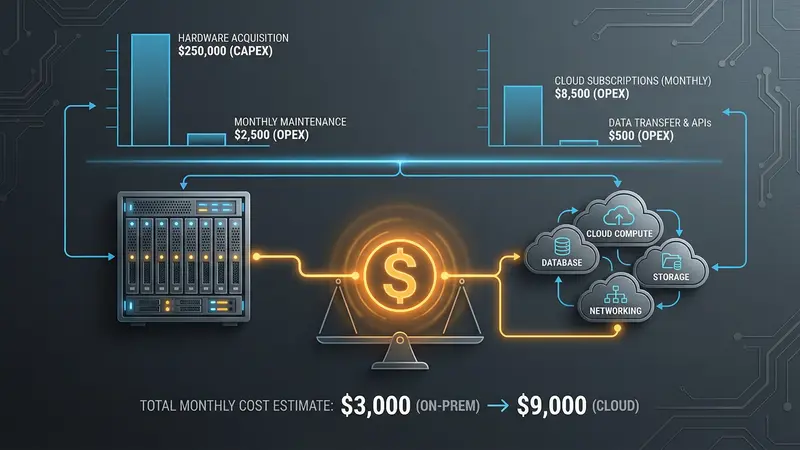
My Homelab Stack: Everything I Run
A tour of my homelab stack: the hardware and the services I run, grouped by job, with a calculator for working out your own monthly cost.
Vaultwarden vs Passbolt vs KeePassXC 2026
Vaultwarden vs Passbolt vs KeePassXC vs official Bitwarden. I run Vaultwarden and used KeePassXC for about a year; Passbolt and Bitwarden are researched only.
Portainer vs Dockge vs CLI for Docker
Three ways to manage Docker in a homelab: Portainer, Dockge, and the plain command line. Which to pick based on how you actually run your stack.
iCloud Optimize Storage and Immich Backups
Running Immich for photo backup? iCloud Optimize Storage can quietly back up 3MP thumbnails instead of originals. How to audit your library and fix it.
WireGuard vs Tailscale for Your Homelab
WireGuard vs Tailscale for homelab remote access: which to run based on your setup, your patience for configuration, and how often you need to get in.
Nginx Proxy Manager vs Caddy vs Traefik
A direct comparison of the three most common reverse proxies for self-hosting. Which one to pick based on how you actually run your homelab.
Plex vs Jellyfin: Which Should You Self-Host?
An honest comparison of Plex and Jellyfin for self-hosted media: where each one wins, where each one loses, and which to pick for your homelab.
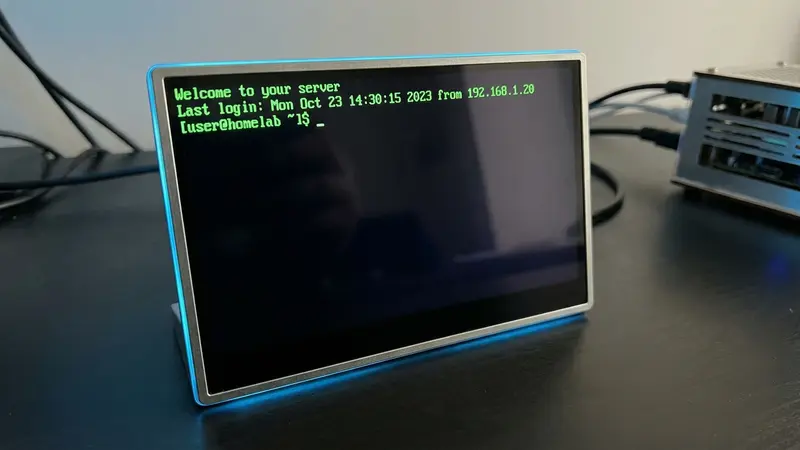
Homelab Backup Strategy: 3-2-1 Made Simple
A practical backup strategy for your homelab that actually gets done: what to back up, where to put it, and how to automate it without overcomplicating it.
Best Self-Hosted Apps for Beginners
The five best apps to self-host first, chosen for low complexity, high value, and real impact on your privacy and monthly bill.
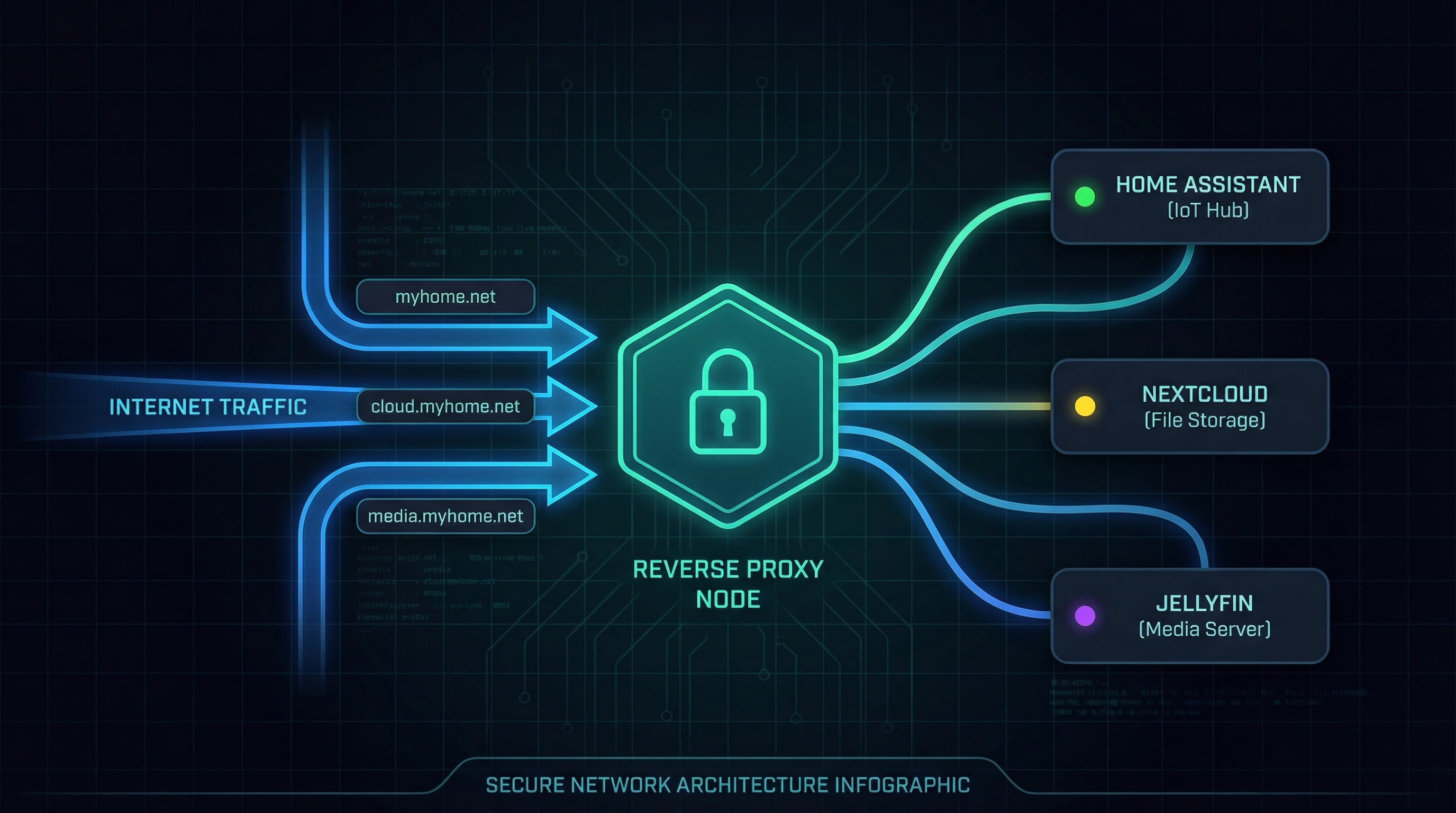
Why Your Homelab Needs a Reverse Proxy
A reverse proxy puts your services behind one entry point with HTTPS and clean domain names. Why it matters and how to set one up with NPM or Caddy.

Setting Up a VPN Kill Switch for Your Homelab
A VPN kill switch blocks all traffic if the VPN connection drops. Here's how to implement one for specific containers or your whole server, and why it matters.
Kubernetes at Home: Is K3s Worth It?
K3s makes Kubernetes small enough for a Raspberry Pi. But should you? An honest take on when home Kubernetes makes sense and when Docker Compose wins.

Self-Hosted Vaultwarden Password Manager
Vaultwarden is a self-hosted Bitwarden server that runs on almost nothing. The setup walkthrough, backup strategy, and trade-offs before trusting it.
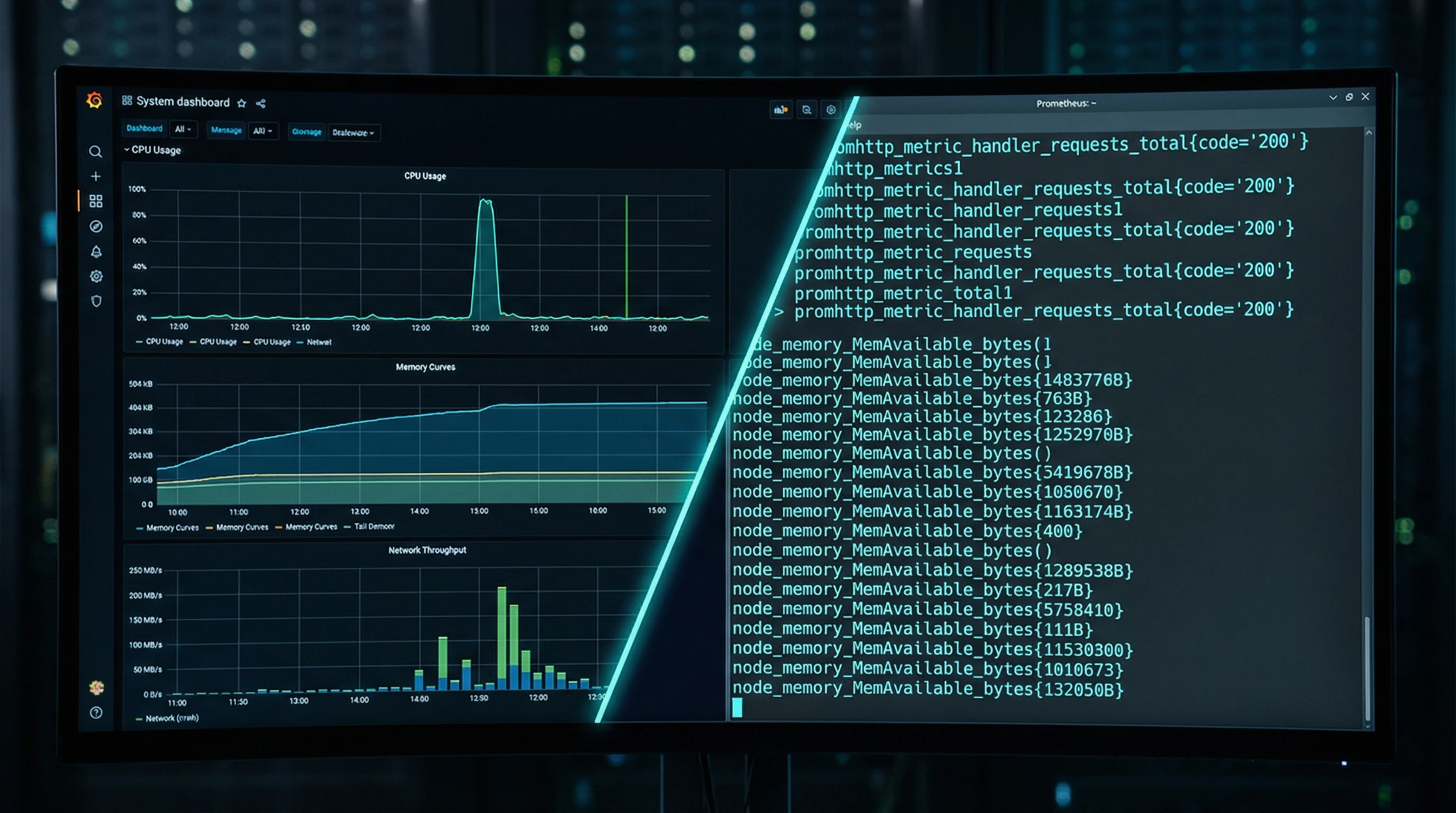
Homelab Monitoring: Prometheus and Grafana
Prometheus scrapes metrics. Grafana makes them pretty. Together they give you dashboards that actually tell you what's happening on your homelab.
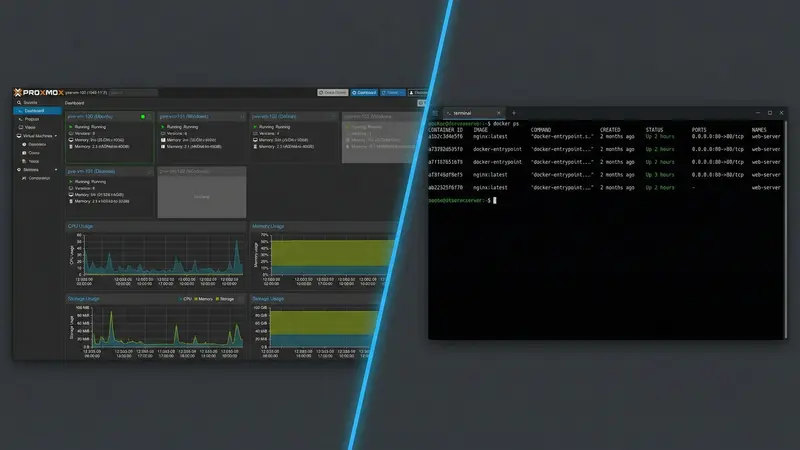
Docker vs Proxmox: Which for Your Homelab?
Docker on bare metal vs Proxmox: a direct comparison of both approaches, when to pick each, and when running both on the same machine is the right call.
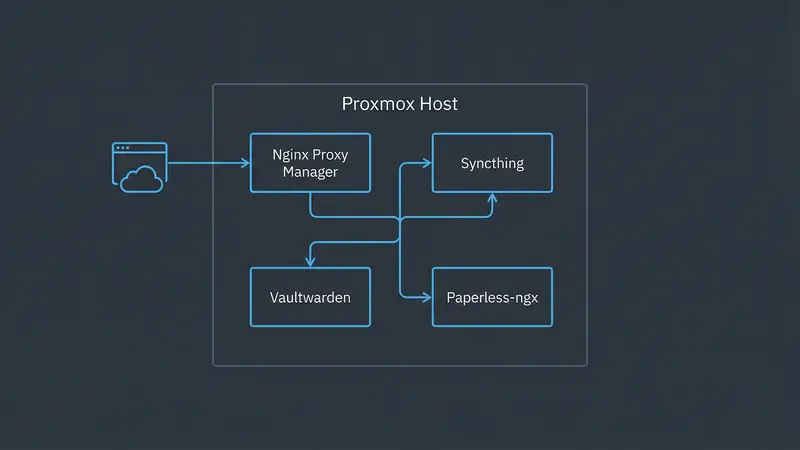
The Budget Homelab Starter Stack: 5 Services
Skip the overwhelm. These five self-hosted services cover file sync, password management, reverse proxying, remote access, and document storage.